




Why Tin Whistles, Cups, and Lanterns Still Matter in a Plastic World
Reflections | September 10, 2026

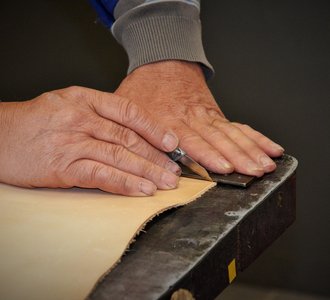
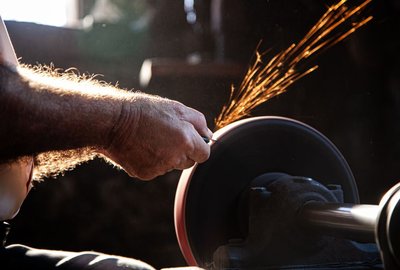
Pick up a tin cup made by hand and you notice something immediately: it has weight, but not the dead weight of a molded object. It has variation. The rim might be slightly uneven. The seam shows where the maker folded and closed it. Run your thumb along the inside and you can feel the hammer marks, faint as breath. This is an object that was made by a person, at a bench, over time. In a world where almost everything around us is extruded, molded, or printed by machines we never see, that quality is not sentimental. It is a different kind of value altogether.
Tin was never a precious metal. That is precisely why it has always been the people's metal. It took the form of everyday things: cups, plates, lanterns, boxes, scoops, and whistles. It went to sea, to the kitchen, to the barn, and to the pockets of children. It was affordable, repairable, and endlessly useful. When plastic arrived, it promised the same affordability without the weight or the rust, and for a while it seemed to win. But plastic does not dent in a way that tells a story. It does not take solder. It does not sit on a shelf and slowly turn the color of time.
The Case for Objects That Can Be Mended
One of the strongest arguments for tin is that it can be fixed. A split seam can be soldered. A loose handle can be re-riveted. A dent can be worked out, or left in place as a record of use. This repairability changes your relationship with the object. You stop thinking of it as disposable and start thinking of it as yours to keep. I have a tin lantern that has been re-soldered three times, each repair a little less elegant than the last, and I would not trade it for a new one. The repairs are part of its biography. They also represent a small refusal of the throwaway habit that has come to define so much of modern life.
Slow Objects in a Fast Economy
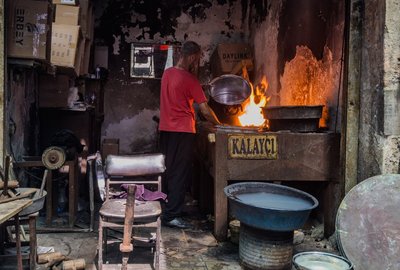
There is also the matter of the maker. When you buy a hand-worked tin cup, you are not just buying a vessel. You are buying someone's hours, their practice, and their attention. You are supporting a craft that survives because people choose it, not because it is the cheapest option. That choice ripples outward. It keeps tools in use, skills alive, and small workshops open. It also changes the buyer, at least a little. Once you own something made slowly, you begin to notice how much of what you own was made quickly, and you start to ask different questions about where things come from.
None of this means tin should replace plastic everywhere. That is not the point. The point is that tin still has a place, and that place is not nostalgic. It is practical, human, and quietly stubborn. A tin whistle, a cup, a lantern: small objects, made to be used, made to be mended, made to outlast the moment they were bought. In a plastic world, that is no small thing.


-

-
Solder, Rivet, or Fold: Choosing the Right Joint for Your Tin Project
Sep 3, 2026Projects & Tutorials

-

-

-
Why Tin Whistles, Cups, and Lanterns Still Matter in a Plastic World
Sep 25, 2026Techniques & Craft

-

Tinsmith Tales
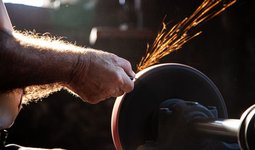
The final steps of a tin project are easy to rush, but the right finish protects the metal, honors the work, and determines how the piece ages.