






Solder, Rivet, or Fold: Choosing the Right Joint for Your Tin Project
Techniques & Craft | September 19, 2026

When people picture tin-smithing, they usually imagine the shaping: the hammer falls, the metal curves, a lantern or cup emerges from a flat sheet. But ask anyone who has repaired their own work after a few months, and they will tell you the shaping is the easy part. The joints are where a piece proves itself. A seam that looks fine on the bench can weep, crack, or rattle loose once the object is actually used, and the choice of joint is often made long before that failure shows up.
The three joints you will reach for most often are soldering, riveting, and folding. Each has a personality, and each asks something different of your hands and your patience.
The Case for Soldering
Soldering is the joint most beginners learn first, and for good reason. With a clean surface, the right flux, and a steady iron or torch, solder wicks into a seam and locks it tight. It is excellent for watertight work like cups, pitchers, and small containers, and it lets you join pieces that would be awkward to fold. The catch is preparation. Solder refuses to bond to grease, oxide, or hesitation. You must clean the metal, fit the seam closely, and heat evenly, or you will get a blob that sits on top of the work instead of flowing into it. I have watched more projects fail at the soldering stage than at any other, and nearly every failure traced back to rushing the cleaning or the fit. When soldering goes well, it is almost invisible. When it goes badly, it is the first thing anyone notices.
Rivets and Folds: Strength Without Heat
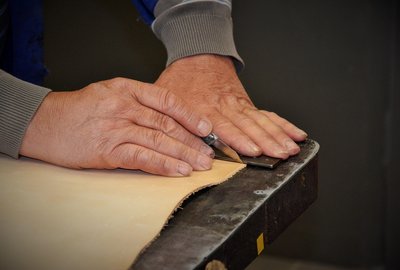
Riveting is the joint for pieces that need to move, bear weight, or survive temperature swings. A well-set rivet is a small piece of sculpture: a shank through drilled holes, a head formed on each side, snug but not crushing the metal around it. Rivets shine on handles, hinges, brackets, and anything that will be knocked around. They also let you join dissimilar metals without worrying about solder compatibility. The trade-off is that rivets are visible, and a sloppy one looks sloppy forever. Folding, by contrast, is the quietest joint in the shop. A folded seam, sometimes called a lap or lock seam, uses the metal itself as the fastener. You bend an edge, hook it over another, and work it closed with a mallet and a stake. Folded seams are strong, require no heat or filler, and age gracefully because there is no solder to crack. They are the traditional choice for boxes, canisters, and roof flashing, and they reward practice more than any other technique. The metal does the work, but only if your bends are true and your allowances are measured.
In practice, most good tinwork uses all three. A lantern might have folded corners, riveted hangers, and a soldered base. The skill is not picking a favorite but reading the piece: where will it flex, where will it hold water, where will it be grabbed and pulled. Choose the joint that matches the job, and your work will outlast your enthusiasm for making it.
-

-

-
The Quiet Art of Tin: Why This Humble Metal Deserves a Second Look
Aug 27, 2026Projects & Tutorials


Tinsmith Tales

Old tin carries its history in seams, marks, and wear patterns, and learning to read those clues turns a flea market find into a conversation with the past.